Kilimanjaro Climb: Machame, Lemosho, Rongai & Marangu Routes
tour features
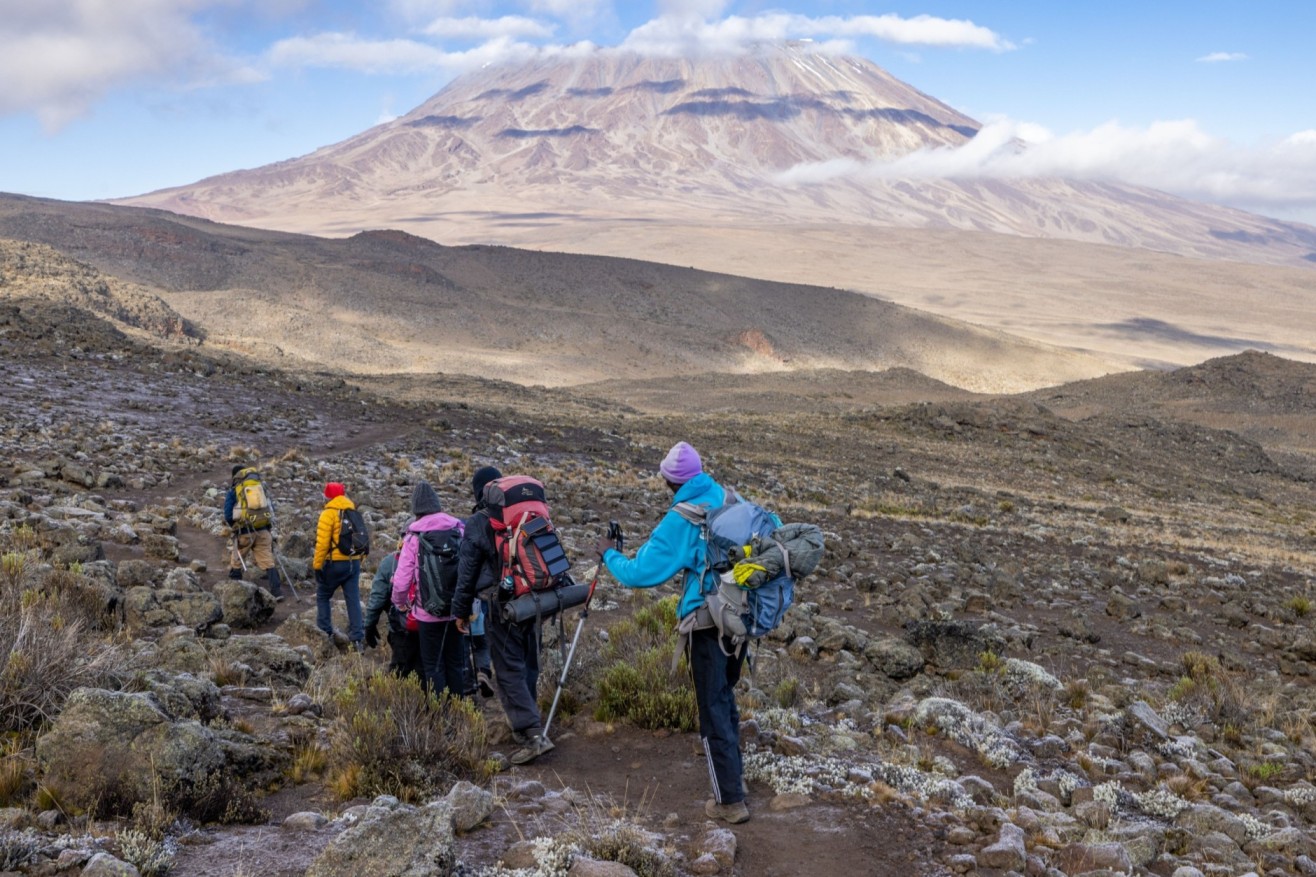
Kilimanjaro climb: stand on the Roof of Africa. At 5,895 m, Uhuru Peak is the highest point in Africa and the summit of the world’s highest free-standing mountain. Your trek climbs from lush rainforest through heath and moorland to alpine desert and the glaciers of Kibo, with a sunrise summit you will never forget.
About This Kilimanjaro Climb
Quick Answer
A Kilimanjaro climb with The Out Of Africa Experience takes 6 to 9 days, depending on the route. Our recommended trips are the 7-day Machame route and the 8-day Lemosho route, which give time to acclimatise and a better chance of reaching the summit. Every climb includes trained Kilimanjaro guides (1 guide for every 2 climbers), park and rescue fees, mountain camping or huts with full-board meals, supplemental oxygen, pulse oximeters, emergency evacuation and transfers from Arusha or Moshi.
No technical climbing skills are needed, just good fitness, determination and enough days on the mountain to adjust to the altitude. Our experienced guides set a slow, steady pace (“pole pole” in Swahili), check your health every day and support you all the way to the top.
Duration
6–9 Days
Summit
Uhuru Peak, 5,895 m
Start / End
Arusha or Moshi
Guides
1 Guide per 2 Climbers
Kilimanjaro Climb Highlights
🏔 A sunrise summit on Uhuru Peak, the Roof of Africa
🌿 Five climate zones, from rainforest to arctic summit
🌄 The Shira Plateau, Lava Tower and the Barranco Wall
❄ Views of Kibo’s glaciers and the jagged peak of Mawenzi
🩺 Supplemental oxygen and daily health checks with pulse oximeters
Recommended Itinerary: 7-Day Machame Route
The best all-round Kilimanjaro climb. Machame is popular for good reason: it crosses the most spectacular parts of the mountain and its “climb high, sleep low” profile helps you acclimatise.
Tap each day to see the details.
Day 1: Machame Gate – Machame Camp
⛺ Overnight: Machame Camp · Full Board
After breakfast, drive from Arusha or Moshi to Machame Gate, where your crew finalises packing and you complete park formalities. Hike through lush afromontane rainforest, with a picnic lunch on the trail, looking out for endemic plants as the forest changes with altitude.
Day 2: Machame Camp – Shira Camp
⛺ Overnight: Shira Camp · Full Board
A steeper start gains altitude quickly as you leave the forest for the heath zone, where helichrysum and giant lobelias appear. Along the way, see lava tubes and glacial valleys before reaching camp on the edge of the Shira Plateau.
Day 3: Shira Camp – Lava Tower – Barranco Camp
⛺ Overnight: Barranco Camp · Full Board
A “climb high, sleep low” day. Hike into the alpine desert, with the option to go up to Lava Tower if you feel strong, then descend to Barranco Camp. It is a long day, but one of the most important for acclimatisation.
Day 4: Barranco Wall – Karanga Camp
⛺ Overnight: Karanga Camp · Full Board
From Barranco, famous for its giant groundsels, scramble up the Barranco Wall and cross glacial valleys to Karanga Camp in time for lunch. In the afternoon, take a short walk with your guides for views of Kibo’s southern walls.
Day 5: Karanga Camp – Barafu Camp
⛺ Overnight: Barafu Camp · Full Board
A half-day hike through stark alpine desert to Barafu, the base camp for the summit. Lunch is in camp, leaving the afternoon to rest and prepare. After an early dinner, sleep for a few hours, with views of Mawenzi in the evening light.
Day 6: Summit Day – Uhuru Peak – Mweka Camp
⛺ Overnight: Mweka Camp · Full Board
Set off just before midnight for the summit. Climb slowly through the night to reach the crater rim at Stella Point around dawn, then continue along the rim to Uhuru Peak, the Roof of Africa. After your summit photos, descend to Mweka Camp before dusk.
Day 7: Mweka Camp – Mweka Gate – Arusha or Moshi
After breakfast, descend through the montane forest to Mweka Gate. Around midday, say farewell to your crew and transfer back to your hotel for a well-deserved hot shower.
End of your Kilimanjaro climb.
Choose Your Kilimanjaro Route
Every route reaches Uhuru Peak. The main differences are scenery, crowds, comfort and how many days you have to acclimatise. More days on the mountain mean a better chance of reaching the summit.
| Route | Days | Sleep In | Best For |
|---|---|---|---|
| Machame | 7 (or 6) | Tents | The best all-round climb |
| Lemosho | 8 (or 7, 9) | Tents | The finest scenery and acclimatisation |
| Rongai | 7 (or 6) | Tents | Quieter trails and a gentler gradient |
| Marangu | 6 | Huts | Climbers who prefer huts to tents |
| Umbwe | 6 | Tents | Fit, experienced hikers wanting a challenge |
Lemosho Route: 8 Days (also 7 or 9 days)
The complete Kilimanjaro experience. Starting on the remote western side, Lemosho crosses the Shira Plateau and the most spectacular parts of the mountain, joining the Machame route above Shira, with extra time to acclimatise. The summit is via Stella Point, and the descent via Mweka.
Day 1: Lemosho trailhead – Forest Camp
Day 2: Forest Camp – Shira 1 Camp
Day 3: Shira 1 – Shira 2 Camp (short acclimatisation day)
Day 4: Shira 2 – Lava Tower Camp
Day 5: Lava Tower – Karanga Camp
Day 6: Karanga – Barafu Camp
Day 7: Summit via Stella Point – Mweka Camp
Day 8: Mweka Camp – Mweka Gate – Arusha or Moshi
The 7-day version suits very fit climbers. The 9-day version adds a night in Kibo’s summit crater, with a short sunrise walk to Uhuru Peak.
Rongai Route: 7 Days (also 6 days)
Climbing from the drier northern side near the Kenyan border, Rongai is quieter than Machame or Marangu, with a gradual ascent and a better chance of seeing wildlife on the lower slopes. It includes an acclimatisation day at Mawenzi Tarn, summits via Gilman’s Point and descends via Marangu.
Day 1: Nale Moru Gate – Simba Camp
Day 2: Second Cave – Kikelewa Caves Camp
Day 3: Kikelewa – Mawenzi Tarn Camp (4,330 m)
Day 4: Acclimatisation day at Mawenzi Tarn
Day 5: Across the saddle to Kibo Camp (4,700 m)
Day 6: Summit via Gilman’s Point – Horombo Camp
Day 7: Horombo – Marangu Gate – your hotel
Marangu Route: 6 Days
The original route up Kilimanjaro, and the only one with shared huts and bunk beds instead of tents, a good choice in the wetter months. It is busy and sees less of the mountain than the western routes, ascending and descending the same way via Gilman’s Point.
Day 1: Marangu Gate – Mandara Hut (optional walk to Maundi Crater)
Day 2: Mandara – Horombo Hut
Day 3: Acclimatisation hike towards Mawenzi – Horombo Hut
Day 4: Horombo – Kibo Hut
Day 5: Summit via Gilman’s Point – Horombo Hut
Day 6: Horombo – Marangu Gate – your hotel
Umbwe Route: 6 Days
The most direct route, very steep in the first two days, for fit and adventurous climbers who want fewer crowds at the start. It joins the Machame route at Barranco, summits via Stella Point and descends via Mweka.
Day 1: Umbwe Gate – Umbwe Cave Camp
Day 2: Umbwe Cave – Barranco Camp
Day 3: Barranco Wall – Karanga Camp
Day 4: Karanga – Barafu Camp
Day 5: Summit via Stella Point – Mweka Camp
Day 6: Mweka Camp – Mweka Gate – your hotel
Machame Route: 6 Days
The same route as our recommended itinerary, but without the night at Karanga Camp, so Day 4 is a long hike from Barranco straight to Barafu. Only recommended for very fit climbers who acclimatise well; for most people, the 7-day version gives a much better chance of reaching the summit.
Western Breach Routes (Lemosho, 8 or 9 Days)
For experienced hikers and mountaineers, these Lemosho variations climb the dramatic Western Breach to camp inside Kibo’s crater, with a daytime summit and time to explore the ash pit. The Western Breach carries an increased risk of rockfall, so it requires a separate waiver and depends on your guide’s daily assessment of the weather and conditions.
What’s Included
✓ Trained Kilimanjaro guides (1 guide to 2 climbers)
✓ All Kilimanjaro park fees and rescue fees
✓ Emergency medical evacuation
✓ Supplemental oxygen and pulse oximeters
✓ Mountain accommodation as described in the itinerary, with full-board meals
✓ Transfers as described in the itinerary
✓ Drinks on the hike: drinking water, tea, coffee and hot chocolate
Not Included
✗ International flights and airport departure taxes
✗ Entry visas
✗ Gratuities for your mountain crew (guideline US$150 per climber)
✗ Hotel nights before and after the climb, unless added
✗ Drinks at hotels, laundry and personal items
✗ Hospital bills and international evacuation in an emergency
✗ Changes to the itinerary, which may change the price
Add Mount Meru or a Safari
Climb Mount Meru (4,566 m) on a 4-day hike through Arusha National Park before Kilimanjaro: it is a superb acclimatisation trek, with wildlife on the lower slopes and views of Kilimanjaro from the summit. After your climb, relax on a safari in the Serengeti and Ngorongoro Crater, or on the beaches of Zanzibar.
Good to Know
• You don’t need climbing experience, but you should be in good health and comfortable hiking for 5–7 hours a day. Summit night is longer.
• Altitude affects everyone differently. Walk slowly, drink plenty of water and tell your guide about any symptoms; we recommend seeing your doctor before you travel.
• The best times to climb are the drier months, roughly January to early March and June to October.
• Travel insurance that covers trekking up to 6,000 m is strongly recommended.
• Every traveller entering Tanzania must complete the online Traveler’s Health Surveillance Form.
Kilimanjaro Climb: Frequently Asked Questions
How many days does it take to climb Kilimanjaro?
Between 6 and 9 days, depending on the route. We recommend at least 7 days, such as the Machame route, or 8 days on the Lemosho route, because more time to acclimatise gives you a much better chance of reaching the summit.
Which is the best route up Kilimanjaro?
For most climbers, the 7-day Machame or 8-day Lemosho route. Rongai is quieter with a gentler gradient, Marangu is the only route with huts, and Umbwe suits fit, experienced hikers.
Do I need climbing experience?
No. Kilimanjaro is a trek, not a technical climb. You need good fitness, determination and enough days to adjust to the altitude. Hiking practice before your trip helps a lot.
What happens if I get altitude sickness?
Your guides check your health daily with pulse oximeters and carry supplemental oxygen. If symptoms become serious, the most effective treatment is to descend, and emergency evacuation is included in your climb.
How much should I tip the mountain crew?
As a guideline, allow around US$150 per climber for the whole crew of guides, cooks and porters. Tips are usually given at the end of the climb.
Can I combine a Kilimanjaro climb with a safari?
Yes, and it’s the perfect reward. Add our 5-Day Tanzania Safari to Lake Manyara, the Serengeti and the Ngorongoro Crater, or relax afterwards on a Zanzibar beach.
Prefer a taste of the mountain without the full climb? Our 10-Day Tanzania Adventure Safari includes a Kilimanjaro day hike, plus the Serengeti and Ngorongoro.
Book Your Kilimanjaro Climb
Tell us your dates, fitness level and preferred route, and we’ll help you choose the right climb and plan everything from the airport to the summit.







Reviews
There are no reviews yet.